
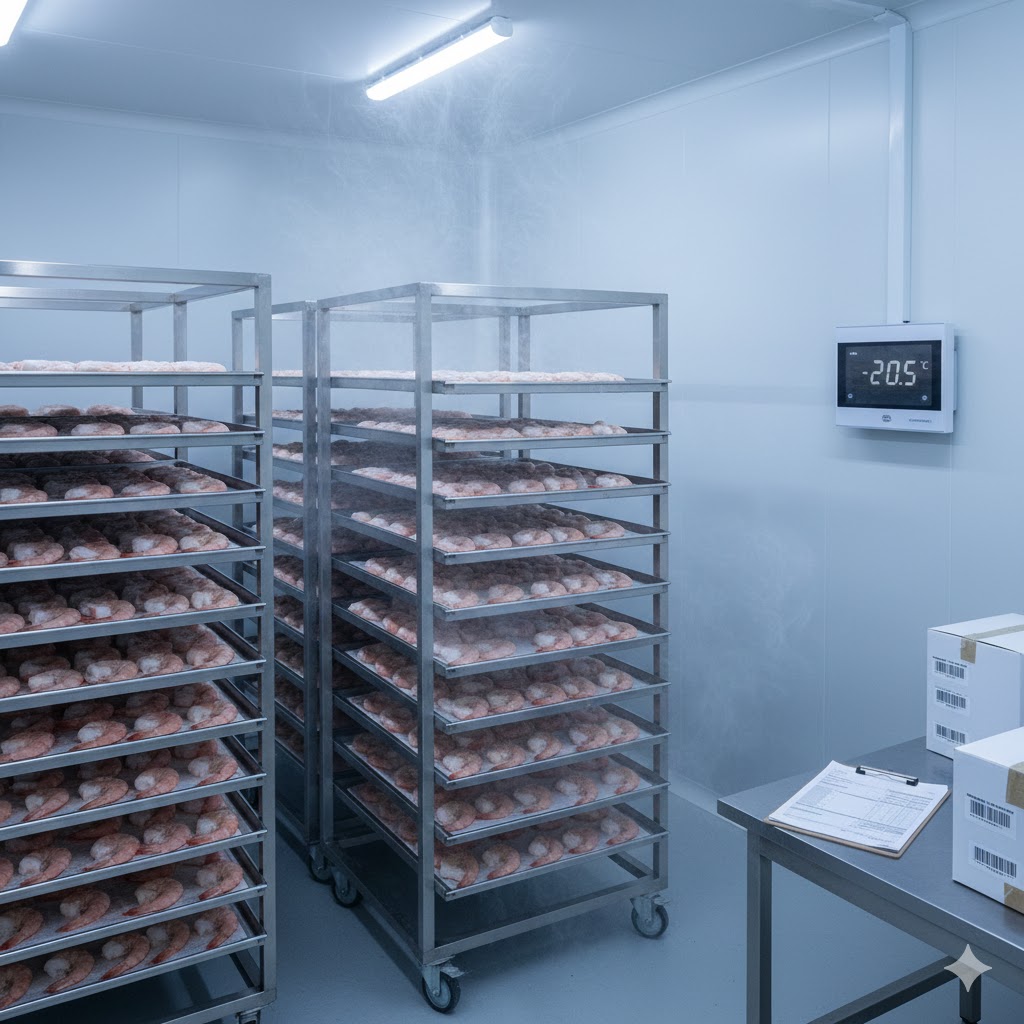
Shrimp is one of the world’s most traded seafood commodities, and its global journey—from the farm to foreign buyers—relies heavily on one critical system: shrimp cold chain logistics. For exporters, importers, distributors, and retailers, maintaining the precise cold chain is not just a routine step—it’s the backbone of product quality, food safety, shelf life, and international compliance.
In this article, we explore how the modern cold chain works, why it matters, and the essential technologies and practices that guarantee top-tier shrimp quality for global markets.
Cold Chain Logistics Determines Export Quality
The first and most fundamental reason cold chain logistics matters is product quality. Today’s global buyers are extremely strict about color retention, moisture level, texture firmness, and microbial safety. That’s why exporters rely on shrimp cold chain logistics for export quality, ensuring the entire journey—from harvesting, chilling, processing, freezing, and shipment—follows a controlled temperature protocol.
Export-grade shrimp must maintain consistent temperatures between 0°C to -25°C, depending on the product type (fresh, IQF, block frozen, semi-processed). When this chain remains unbroken, the shrimp reaches its destination with the same quality it had when first processed.
A well-maintained cold chain ensures exporters avoid thawing, drip loss, discoloration, or bacterial growth—issues that can destroy international buyer trust instantly.
Temperature-Controlled Shipping Protects Product Integrity
One of the biggest challenges in the global shrimp trade is the long duration of ocean freight. Shipping to regions such as the USA, Europe, and the Middle East can take weeks. During this time, temperature-controlled shipping for shrimp products becomes the decisive factor that protects the product’s integrity.
Modern reefer containers are equipped with:
- precise temperature calibration
- real-time temperature monitoring & alerts
- airflow circulation systems
- humidity control
- backup energy systems
These features help exporters maintain consistent temperatures without fluctuation. Even a few degrees of temperature variance can lead to partial thawing, which triggers rapid deterioration and reduces product value.
Temperature-controlled shipping ensures the shrimp stays frozen solid, maintains color, avoids freezer burn, and arrives ready for distribution.
Cold Storage Solutions Ensure Long-Term Freshness
Even before shipment, exporters must rely on proper cold storage solutions for frozen shrimp. This includes blast freezers, plate freezers, IQF tunnels, and cold rooms that stabilize the product at the ideal core temperature.
Effective cold storage systems offer:
- rapid freezing capabilities for moisture lock
- stable temperature maintenance
- hygienic stainless-steel storage racks
- energy-efficient refrigerant systems
- optimal humidity balance
Rapid freezing—especially IQF—helps retain the shrimp’s natural sweetness, translucency, and firm bite. Combined with proper storage, it ensures the shrimp remains in perfect condition even if held for weeks before export.
Cold storage is not merely a warehouse; it’s a controlled environment that preserves quality, prevents oxidation, and protects the product from contamination.
Best Practices Reduce Cold Chain Break Risks
Maintaining the cold chain might sound straightforward, but it requires coordinated execution. Exporters depend on shrimp cold chain management best practices to ensure that no part of the supply chain fails.
These best practices include:
- ensuring chillers/freezers reach target temperatures before loading
- using insulated containers during short-distance transfers
- avoiding stacking errors to maintain airflow
- continuous monitoring using digital thermologgers
- timestamped temperature documentation for compliance
- trained staff to handle frozen products
Every step—from pond harvesting to processor loading—must follow strict SOPs to avoid thawing or temperature shock.
The best suppliers implement redundancy systems, monitoring at every stage, and clear communication protocols with logistics providers.
Cold Chain Technology Enhances Traceability & Compliance
Modern exporters face strict regulations from importing countries. Authorities in the EU, USA, Japan, China, and the Middle East require complete traceability and temperature records. Having a reliable cold chain is essential to meet these standards.
New technologies used in shrimp cold chain logistics include:
- IoT-based real-time temperature trackers
- QR-code product traceability
- Bluetooth thermologgers
- data logging devices inside reefer containers
- automated alerts for temperature deviation
These systems provide documentation that proves the shrimp was transported under safe conditions, reducing the risk of rejection at ports—a costly and reputation-damaging incident.
Traceability not only builds trust but gives buyers the confidence that every batch follows international safety standards.
The Cold Chain Shapes Global Buyer Confidence
Buyers—from wholesalers to large retail chains—purchase based on trust. They expect the product to match specifications consistently. A reliable cold chain directly shapes that trust.
With proper shrimp cold chain logistics, exporters can guarantee that:
- shrimp maintains its size and moisture
- color remains natural
- texture stays firm
- microbe levels remain safe
- product passes customs inspections safely
This reliability becomes a competitive advantage for exporters. Buyers often return to suppliers who consistently deliver quality, and cold chain reliability is one of the most critical factors in maintaining long-term partnerships.
Strong Cold Chain Systems Support Premium Pricing
A well-maintained cold chain does more than preserve product quality—it increases product value. Importers are willing to pay higher prices for suppliers that can guarantee:
- zero temperature fluctuations
- consistent frozen conditions
- correct handling during loading and unloading
- transparent temperature documentation
This elevates the shrimp into premium-grade status, suitable for high-end markets such as premium retail, hotel chains, and global seafood brands.
Shrimp that goes through a reliable cold chain is fresher, safer, and more visually appealing—which directly translates to better retail performance and repeat orders.
Cold Chain Logistics Is the Backbone of Shrimp Export Success
Cold chain management is not an optional process—it is a mandatory standard for any exporter aiming to compete in the global market.
From farm harvest to processing, freezing, storage, transport, and final delivery, every step plays a critical role in maintaining product safety, quality, and market value. With global demand rising, exporters with strong cold chain systems will become leaders in the international shrimp supply chain.
For companies like YSI Seafood, this is not just logistics—it’s a commitment to quality, reliability, and long-term partnership with global buyers.