
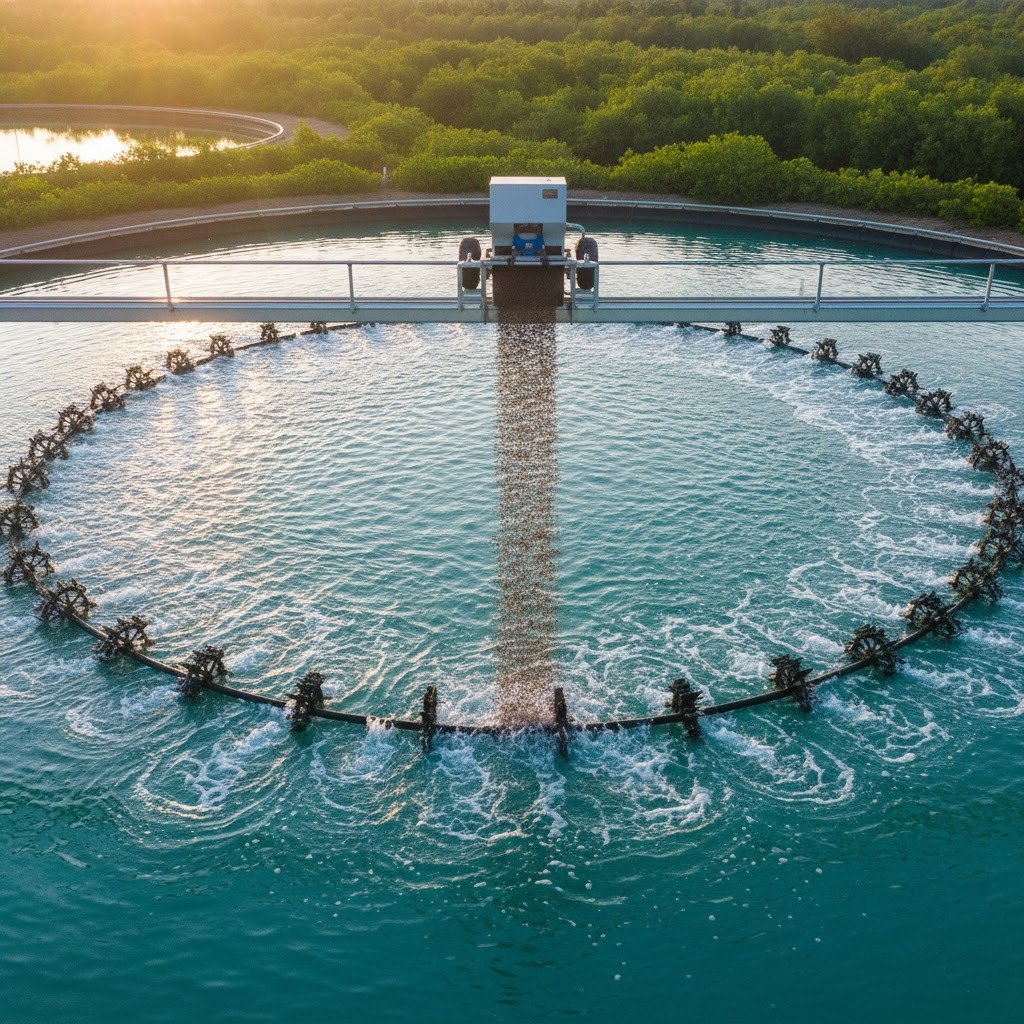
Shrimp farming is becoming more competitive every year, and one of the most important factors that determines a farm’s success is shrimp feed efficiency. Feed accounts for 50–70% of total production costs, which means every small improvement in efficiency can directly increase profitability. Modern farmers especially those operating intensive or semi-intensive systems are now paying closer attention to how feed is used, how shrimp respond, and what tools can help maximize growth with minimal waste.
In this article, we explore seven key ways feed efficiency impacts farm performance, the latest technologies that help farmers optimize feeding programs, and the natural methods that support healthier ponds and stronger shrimp growth.
Understanding Shrimp Feed Efficiency in Intensive Farming
In intensive aquaculture, stocking densities are high and shrimp rely almost entirely on formulated feed for growth. Because of this, shrimp feed efficiency in intensive farming becomes a crucial indicator of performance. Farmers measure efficiency using FCR (Feed Conversion Ratio), which reflects how much feed is required to produce one kilogram of shrimp biomass.
When intensive farms optimize feed efficiency, several benefits follow instantly:
- Lower production cost
- Higher survival rate
- Cleaner ponds
- More stable water quality
- Faster harvest cycles
In contrast, poor efficiency leads to waste, ammonia spikes, slower growth, and outbreaks of disease. That’s why intensive farms today are adopting smarter feeding strategies, better pond designs, and automated systems to ensure every pellet is actually eaten.
How to Improve Shrimp Feed Efficiency Naturally
Many farmers now want to reduce dependence on chemicals or quick-fix additives. They are looking for solutions that improve feed performance organically. This is where how to improve shrimp feed efficiency naturally becomes extremely valuable.
Natural improvement methods include:
- Maintaining stable water parameters (DO, pH, salinity)
- Using probiotics to support gut health
- Reducing stress by optimizing stocking density
- Improving pond microbiology
- Providing natural algae or bio floc as supplementary nutrition
Healthy shrimp digest feed better and convert nutrients more efficiently. When the pond ecosystem is balanced, shrimp experience fewer stressors, leading to better appetite and predictable growth curves. Natural methods are cost-effective and build long-term pond resilience.
Technology That Increases Shrimp Feed Efficiency
Modern farms are moving beyond guesswork. They rely on data, automation, and digital monitoring to control feeding. The adoption of technology that increases shrimp feed efficiency has been one of the biggest breakthroughs in the aquaculture industry.
Key technologies include:
- Auto feeder systems that distribute feed evenly at scheduled times
- Acoustic sensors that detect feeding behavior and automatically adjust feeding rates
- Mobile-based monitoring apps for digital feed records
- Water quality sensors that help prevent feeding during low-oxygen conditions
- AI-powered feeding algorithms
These technologies ensure shrimp receive just the right amount of feed. Farms using auto feeders alone can reduce feed waste by up to 20–30% and achieve more uniform sizes during harvest. Automation also frees farm workers to focus on water quality and pond management instead of manual feeding.
Best Practices for Maximizing Shrimp Feed Efficiency
It’s not only technology and natural methods that matter. Farmers also need strong management strategies. That’s why understanding best practices for maximizing shrimp feed efficiency is essential for long-term success.
Some proven best practices include:
- Feeding more frequently in smaller portions
- Avoiding feeding during low DO periods
- Observing feeding trays regularly
- Adjusting feed rates based on shrimp biomass
- Syncing feeding schedules with shrimp metabolism (late afternoon & evening)
A combination of good management, real-time monitoring, and adaptive feeding strategies often leads to lower FCR, healthier shrimp, and better overall farm performance.
The Role of Water Quality in Feed Efficiency
Feed efficiency is not only about feed it’s also about the environment in which shrimp grow. Water quality directly affects appetite, digestion, and survival. Regardless of technology or management style, if the pond’s water is unstable, shrimp cannot utilize feed efficiently.
Key water quality factors affecting feed efficiency:
- Dissolved oxygen (DO)
- Temperature
- pH
- Ammonia and nitrite levels
- Turbidity
Shrimp experiencing poor water quality typically stop eating, resulting in wasted feed and slower growth. Farms that invest in aeration, monitoring sensors, and regular water exchange tend to achieve much better feed conversion ratios.
- Improving Shrimp Health to Enhance Feed Performance
Healthy shrimp grow faster and convert feed more efficiently. Immunity, stress, and gut health play major roles in determining how well shrimp absorb nutrients.
Some ways to support shrimp health for better feed efficiency:
- Use probiotics and prebiotics to improve gut function
- Maintain consistent salinity levels
- Reduce stress from handling or sudden changes
- Provide high-quality feed with ideal protein-fat balance
Shrimp that are less stressed and have proper gut flora can digest more efficiently, leading to better FCR and uniform harvest sizes.
The Business Impact of Feed Efficiency
Ultimately, improving feed efficiency leads to one very important outcome: higher profitability. When farms combine natural practices, modern technology, and strong management, they unlock rapid growth with minimal waste.
Business benefits of improved feed efficiency include:
- Lower feed cost per kilogram
- Reduced mortality
- Cleaner water and healthier ponds
- Faster growth cycles → more harvests per year
- Consistent product size that meets export standards
For exporters and international buyers, consistent quality and predictable production are crucial. Farms with good feed efficiency are better positioned to supply large quantities, maintain stable quality, and meet market demands reliably.
Shrimp feed efficiency is more than a technical concept—it’s a core pillar of modern aquaculture success. By understanding the science behind feed conversion, leveraging technology, applying natural improvement methods, and following best management practices, farms can achieve more predictable harvests, healthier shrimp, and significantly higher profits.
Feed efficiency determines the long-term sustainability of a farm, both biologically and financially. As global demand for shrimp continues to grow, efficient feeding strategies will remain a key driver of competitiveness in the international market.