
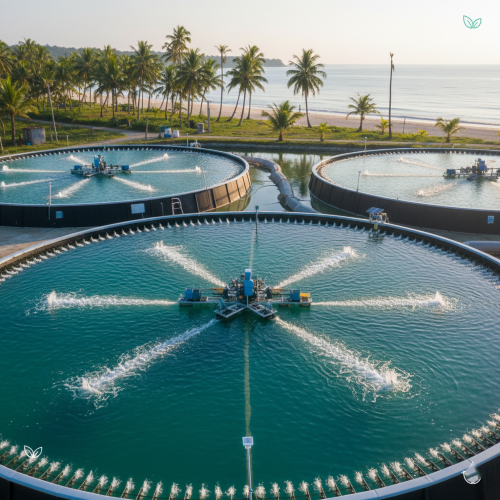
Indonesia has emerged as one of the world’s most influential aquaculture hubs, driven by rising global demand for vannamei shrimp, expanding farming innovation, and increased investment in modern coastal industries. Today, shrimp farming Indonesia is not only central to the country’s economy but also a vital supplier to international markets searching for sustainable, high-quality production.
Behind this rapid evolution lies a combination of tradition, technology, and the commitment of a new generation of farmers. This article explores how Indonesia is shaping global aquaculture through its farming systems, why international buyers are turning toward Indonesian producers, and how the future of shrimp farming is being built across communities like Bombana, Kendari, Lampung, and beyond.
- Indonesia’s Coastal Advantage: Perfect Conditions for Shrimp Farming
Indonesia is home to one of the world’s longest coastlines, stretching across the Indian and Pacific Oceans. This vast maritime geography creates ideal natural conditions for farming shrimp:
- stable tropical temperatures
- high-salinity coastal waters
- nutrient-rich marine ecosystems
- consistent year-round growing seasons
These natural advantages provide an unparalleled foundation for high-productivity shrimp farming systems in Indonesia, allowing farmers to achieve stable production cycles with competitive survival rates.
The climate also enables multiple harvests per year, contributing to Indonesia’s strong position in global shrimp exports.
- The Shift Toward Modern Shrimp Farming Techniques in Indonesia
Over the past decade, Indonesia has undergone a major transformation in farming methods. What was once dominated by traditional rectangular ponds has now evolved into advanced, technology-driven systems.
Modern farms are built using:
- HDPE-lined circular ponds
- centralized aeration systems
- auto feeder integration
- microbubble and blower technologies
- structured water flow design
These innovations collectively represent modern shrimp farming techniques in Indonesia, designed to improve water quality, oxygen distribution, and shrimp growth performance.
The results are clear:
- faster growth cycles
- improved feed conversion ratios
- reduced mortality
- uniform shrimp sizes
- export-grade quality standards
Indonesia’s adoption of these systems has significantly increased yield potential and strengthened its competitiveness globally.
- Millennial Pond Technology: A Farming Revolution Led by Young Innovators
One of the most impactful developments in Indonesia’s aquaculture sector is the rise of shrimp farming Indonesia using millennial pond technology. This breakthrough approach was pioneered by young farmers who recognized the inefficiencies of traditional ponds and sought to optimize land, water, and oxygen management.
Millennial circular ponds offer several advantages:
- more efficient water flow
- reduced dead zones
- improved aeration efficiency
- better biosecurity control
- minimized land usage
- easier maintenance and cleaning
A single hectare of millennial ponds can outperform dozens of hectares of traditional ponds—a revolutionary leap in productivity.
In regions like Bombana, this innovation has lifted entire coastal communities, created employment opportunities, and inspired younger generations to pursue modern aquaculture careers.
- Sustainability at the Center of Indonesia’s Shrimp Industry
Driven by increasing demand from environmentally conscious buyers—especially from Europe, the US, and Japan—producers are adopting sustainable shrimp farming practices in Indonesia to support long-term environmental and economic resilience.
Key sustainability initiatives include:
- wastewater treatment before being discharged
- reduced chemical and antibiotic use
- responsible feed management
- water pre-treatment in dedicated reservoirs
- careful stocking density control
- integrated community-based farming systems
These practices ensure that Indonesia’s shrimp farming sector continues to grow in harmony with its surrounding ecosystem.
Companies like YSI Seafood champion these sustainability pillars, making them trusted partners for buyers seeking ethically produced shrimp.
- Technology-Driven Water and Oxygen Management
One of the defining features of Indonesia’s modern aquaculture is its focus on water quality stabilization. Effective water management directly impacts shrimp survival and growth rates.
Advanced farms now utilize:
- dissolved oxygen monitoring
- microbubble diffuser systems
- high-efficiency paddle wheels
- blower-assisted aeration
- automatic pH and ammonia checks
These systems work together to ensure optimal living conditions, resulting in stronger, healthier shrimp and more predictable harvests.
This precision in water management is a key factor in Indonesia’s rapidly rising export quality.
- Community Empowerment and Farmer Collaboration
Shrimp farming in Indonesia is more than an industry—it is a livelihood backbone for millions of coastal families. Across regions like Bombana, Wakatobi, Banyuwangi, and Lampung, a new wave of collaborative farming has emerged.
Community-driven initiatives include:
- farmer training programs
- sharing of pond technology
- group purchasing systems for feed and benur
- joint harvest and marketing alliances
- partnerships with certified processors
These networks help small-scale farmers adopt modern systems, improve economic stability, and increase national production capacity.
YSI Seafood itself was born from such a movement, combining the knowledge of millennial farmers with corporate structure to support large-scale market demand.
- Indonesia’s Growing Strength in the Global Shrimp Market
Indonesia is now one of the top global exporters of vannamei shrimp, earning the trust of buyers across:
- China
- Japan
- Middle East
- Europe
- United States
This growing trust is the result of:
- consistent quality
- modern farming systems
- strong export infrastructure
- competitive pricing
- ethical farming practices
- international food safety compliance
Buyers recognize Indonesia as an increasingly reliable source of premium shrimp, and companies like YSI play a key role in maintaining that standard.
- The Future of Shrimp Farming Indonesia: High Productivity and Sustainable Growth
The future of shrimp aquaculture in Indonesia is shaped by innovation, technology, and environmental responsibility. As global demand increases, Indonesia is positioned to expand its footprint even further by integrating:
- AI-based water monitoring systems
- advanced auto-feeding algorithms
- smart pond sensors
- genetic improvement of shrimp post-larvae
- improved waste and sludge management
- renewable energy for aeration systems
This technological integration will allow Indonesia to cement its position as a global aquaculture leader while ensuring long-term sustainability.
YSI Seafood is committed to advancing these practices, connecting high-quality shrimp farming production with international buyers seeking dependable partners.
Indonesia’s shrimp farming industry is a powerful combination of natural advantages, modern innovation, youth empowerment, and sustainable practices. Through the adoption of modern shrimp farming techniques in Indonesia, the advancement of millennial pond technology, and the rise of high-productivity shrimp farming systems in Indonesia, the nation has become one of the world’s most promising and competitive sources of premium vannamei shrimp.
For global buyers seeking consistent quality, ethical sourcing, and long-term supply reliability, Indonesia—and companies like YSI Seafood—represent the future of sustainable aquaculture.