
The global seafood industry is undergoing a massive transition, with consumers, retailers, and regulatory bodies demanding seafood that is not only high in quality but also produced responsibly. In this new era, sustainable shrimp farming has emerged as one of the most important pillars of modern aquaculture. As environmental awareness grows, traditional farming models are gradually being replaced by technology-driven systems designed to protect ecosystems, conserve resources, and ensure long-term productivity.
Indonesia, one of the world’s top producers of vannamei shrimp, has been investing heavily in sustainable methods that balance profitability with environmental protection. From advanced wastewater systems to eco-friendly pond designs, Indonesian farms are showcasing a new standard of global shrimp production.
This article explores the pillars that define sustainable shrimp aquaculture today, highlighting the real practices, technologies, and operational innovations shaping the future of farming.
Eco-Friendly Water Management: The Foundation of Sustainability
One of the core elements of environmentally responsible farming is implementing sustainable shrimp farming with eco-friendly water management systems. Water is the lifeblood of shrimp cultivation, but mismanagement can lead to contamination, disease, or ecosystem damage.
Modern aquaculture integrates water strategies such as:
- controlled intake and pre-filtration
- use of reservoir (tandon) systems for stabilization
- regular monitoring of pH, salinity, DO, and ammonia
- minimizing water exchange through biofloc or microbial balancing
- structured pipe systems to prevent contamination
Eco-friendly management reduces waste release, limits dependency on chemical treatments, and protects coastal environments. For export-focused farms, these practices enhance product safety and credibility, as buyers increasingly seek responsibly farmed seafood.
Wastewater Treatment Systems Protecting Coastal Ecosystems
Alongside smart water management, many farms now rely on sustainable shrimp farming with wastewater treatment system technology to ensure safe discharge. Untreated wastewater can harm mangroves, coral reefs, and local fisheries. To prevent this, modern farms utilize:
- settlement ponds for sludge removal
- biological filtration
- aerated treatment stages
- sterilization using UV or natural probiotics
- secondary sedimentation to prevent nutrient pollution
Some farms even recycle treated water back into pre-growing systems, lowering freshwater usage. This not only reduces environmental impact but also positions farms to meet the rising regulatory standards demanded by global markets such as the EU and North America.
Responsible and Traceable Farming Practices
The modern seafood market requires transparency. This has led to the rise of responsible and traceable sustainable shrimp farming practices implemented across Indonesia’s vannamei farms. Traceability helps buyers track every stage of production—from hatchery, feed, and pond environment to harvesting, packing, and export documentation.
Responsible practices include:
- detailed farm logs and digital monitoring
- documentation of feed sources
- no use of banned antibiotics
- strict biosecurity protocols
- QR-code or batch-based tracking for export shipments
Traceability builds confidence with global buyers, ensuring they can verify origins, farming conditions, and production integrity at every step. Farms using transparent systems consistently achieve higher buyer retention and stronger market positioning.
Producing Export-Grade Shrimp Through Sustainable Systems
Sustainability is not only about environmental protection; it’s also about consistent product quality. Farms adopting sustainable shrimp farming for export-grade vannamei shrimp focus on achieving premium size, texture, color, and uniformity while minimizing ecological impacts.
These farms implement practices such as:
- controlled stocking density
- clean aeration-powered environments
- consistent feeding schedules using auto-feeders
- seabed sludge management to reduce stress
- probiotic-rich water to support natural immunity
By promoting shrimp health through natural systems rather than heavy chemical intervention, farmers produce shrimp with better taste, firmer texture, and longer shelf life—qualities that international markets prioritize.
One of the biggest threats to shrimp farming is disease. Outbreaks can devastate entire ponds and cause economic loss. Modern sustainable farms integrate strong biosecurity measures to protect both the environment and farm productivity.
Key elements include:
- enclosed ponds to prevent contamination
- secure fencing to keep predators and pests out
- designated entry/exit points with sanitation stations
- screened water intake
- regular pond drying and equipment sterilization
These systems reduce the spread of pathogens, minimize antibiotic reliance, and support eco-friendly aquaculture operations.
Feed Efficiency and Responsible Nutrition
Feed is one of the largest contributors to environmental impact in aquaculture. Sustainable farming focuses on optimizing feed usage to reduce waste, cut costs, and support shrimp health.
Sustainable practices include:
- using formulated feed with controlled digestibility
- relying on auto-feeders to reduce human error
- tracking feed conversion ratios through digital monitoring
- supplementing ponds with probiotics and beneficial microbes
Through these strategies, farms reduce uneaten feed that would otherwise lead to ammonia spikes or algal blooms. Efficient feeding is both environmentally responsible and economically beneficial—improving productivity while protecting water quality.
Circular Pond Technology Supporting Water Efficiency
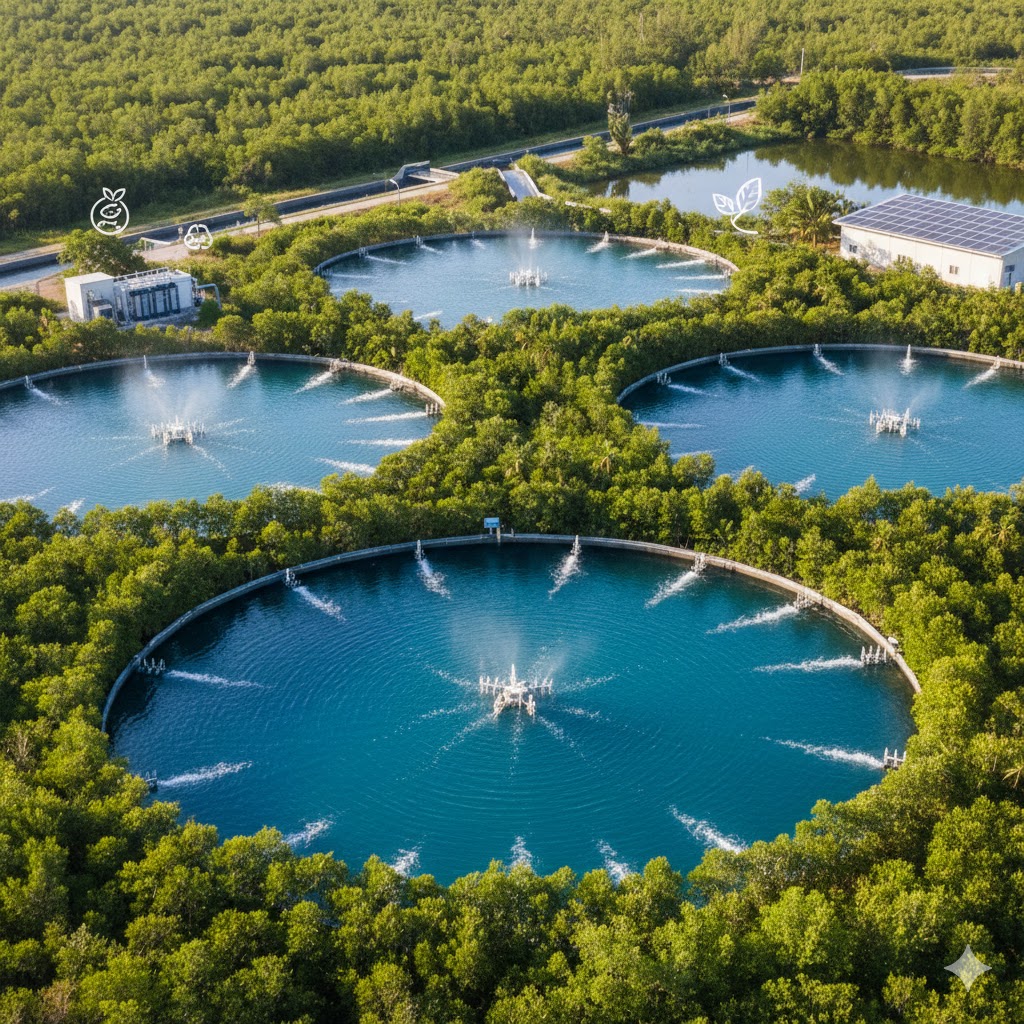
Circular HDPE-lined ponds have become increasingly popular in modern sustainable aquaculture. Their structure promotes natural water circulation, improves oxygen distribution, and minimizes waste accumulation.
Benefits for sustainability include:
- easier sludge removal
- lower water exchange rates
- improved biosecurity
- reduced land footprint
- more controlled farming environments
These ponds support long-term environmental balance and resource efficiency—not only producing healthier shrimp but also reducing farm emissions and water usage.
Social Sustainability and Community Impact
Sustainable farming extends beyond the environment. It also includes supporting local communities, providing jobs, training farmers, and contributing to regional economic development.
Social sustainability practices include:
- empowering millennial farmers with training
- supporting coastal community development
- ensuring fair wages
- providing local employment opportunities
- sharing technological innovations with small-scale farms
Companies like YSI Seafood operate with a community-based approach, strengthening local economies while producing shrimp for international markets.
Sustainability Is the Future of Shrimp Aquaculture
The global aquaculture industry is evolving, and sustainable shrimp farming is at the forefront of this transformation. Through Eco friendly water management, effective wastewater systems, traceable operations, biosecurity measures, advanced pond design, and community empowerment, farms can protect the planet while meeting growing global demand.
Sustainability is not a trend—it is the foundation of long-term aquaculture success. Indonesia’s commitment to responsible farming positions it as a global leader in ethical shrimp production, with companies like YSI Seafood championing standards that benefit buyers, farmers, and ecosystems alike.