
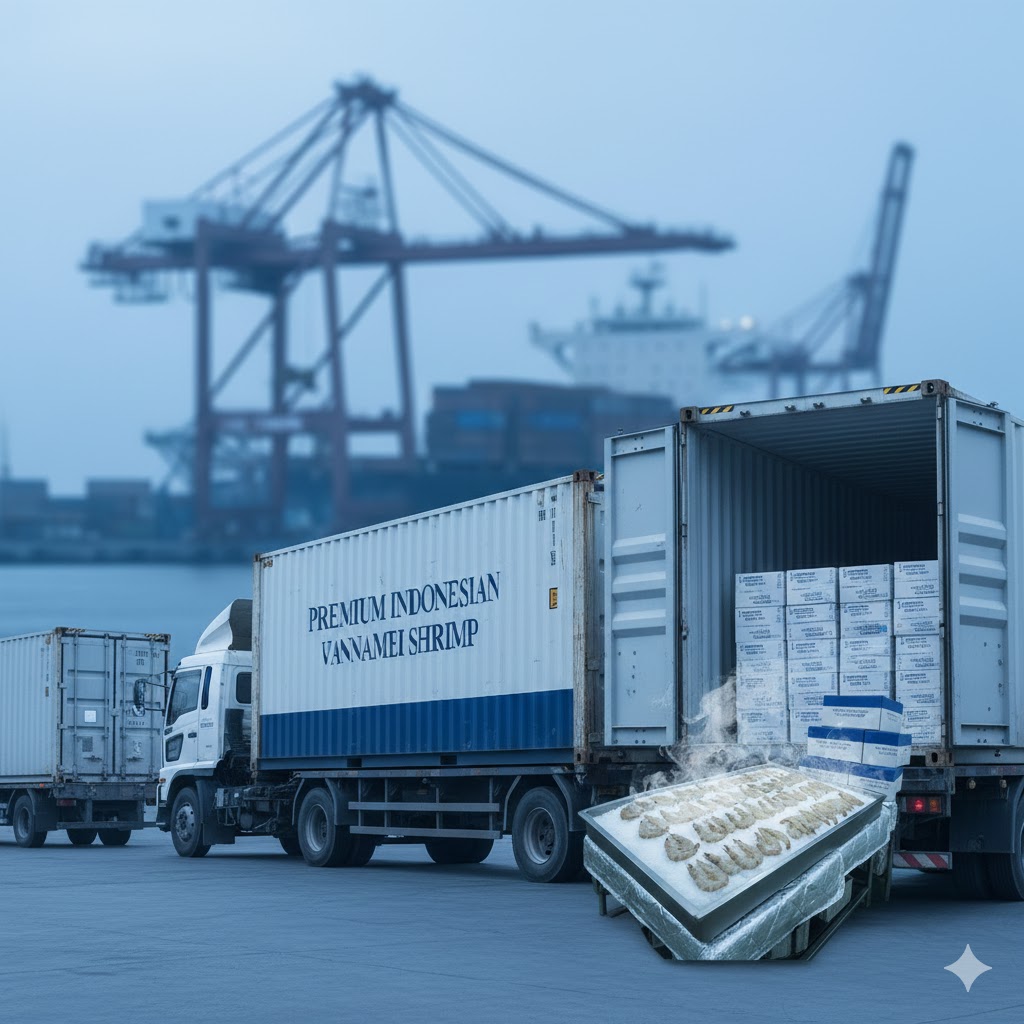
The global seafood industry relies heavily on one critical factor: freshness. No matter how well shrimp are farmed or processed, their final quality depends on how they are handled from the moment they leave the pond until they arrive at the buyer’s destination. This is why shrimp cold chain logistics have become the backbone of international shrimp trade, ensuring that every product remains safe, fresh, and export-ready.
Indonesia, as one of the world’s leading shrimp producers, continues to refine its cold chain ecosystem. Exporters like YSI Seafood depend on reliable cooling systems, insulated transportation, and efficient handling protocols to meet the strict requirements of importers across Asia, Europe, and the Middle East.
Below are seven reasons why cold chain logistics determining the final quality of exported shrimp—and why buyers should prioritize suppliers with strong cold chain capabilities.
Temperature Integrity from Processing to Export Warehouse
A proper cold chain begins immediately after harvest. From the moment shrimp are processed, they must be maintained at consistent temperatures. This is where shrimp cold chain logistics for export processing play a vital role. Shrimp are quickly washed, sorted, beheaded, or peeled depending on the product specification, and moved immediately into cooling systems.
Maintaining temperature integrity is more than just storing products in freezers. It requires:
- rapid chilling to stop microbial activity
- controlled temperature rooms
- loading docks designed for frozen goods
- insulated containers for short-distance transfers
When done correctly, the freshness of the shrimp is preserved from the earliest stage of the export journey.
Efficient Frozen Storage to Protect Product Quality
Once shrimp are processed, they enter a frozen storage facility—usually kept between -18°C to -25°C. Modern processing plants use high-capacity freezers to hold inventory, enabling exporters to serve bulk orders and maintain product stability.
This stage relies on a reliable cold storage system for shrimp export, ensuring that each batch retains texture, color, and moisture content. Proper frozen storage prevents:
- freezer burn
- oxidation
- protein denaturation
- quality degradation during long waiting periods
For buyers, this means consistent product quality, even for large-volume or long-distance shipments.
Temperature-Monitored Logistics for Long-Distance Transport
Exports involve transporting shrimp from cold storage facilities to ports or airports. This step requires vehicles equipped with advanced cooling systems. In this stage, temperature-controlled transportation for shrimp logistics becomes essential.
Professional exporters monitor temperature in real-time using:
- GPS-enabled cold trucks
- data-logged temperature sensors
- insulated containers
- backup cooling systems
If temperature fluctuation occurs—even for a short time—the shrimp can lose its export-grade quality. With proper monitoring and documentation, buyers can trust the integrity of each shipment.
Advanced Freezer Technology Preserves Freshness
Freezing technology defines the core of modern shrimp export. Today, exporters rely on shrimp export logistics with advanced freezer technology to maintain product freshness and quality. These technologies include:
- blast freezers
- plate freezers
- tunnel freezers
- IQF (Individual Quick Freezing) systems
IQF freezing, in particular, ensures shrimp remain separate, easy to pack, and consistent in quality. For premium markets, this is the preferred freezing method because it preserves natural flavor and texture.
Reduced Shrinkage and Spoilage During Transit
One of the biggest challenges in seafood logistics is preventing spoilage during transit. Because shrimp are delicate, even minor temperature deviations can cause significant damage. A well-maintained cold chain prevents:
- drip loss
- texture softening
- black spots
- ammonia smell
- bacterial growth
This reduction in shrinkage directly benefits buyers, ensuring that the final delivered weight is accurate and quality remains high.
Compliance With Global Food Safety Regulations
Countries importing shrimp have strict regulations regarding food safety. A strong cold chain ensures that shrimp remain within safe temperature zones from start to finish. This helps exporters meet global import regulations such as:
- HACCP
- ISO 22000
- FDA requirements
- EU hygiene standards
Cold chain documentation also provides proof of compliance, giving buyers full confidence in the shipment’s safety.
Strong Cold Chain Logistics Strengthen Buyer Confidence
At the end of the day, buyers choose suppliers they can trust. A supplier with strong cold chain logistics provides:
- consistent quality
- stable product texture
- predictable shipments
- low rejection rates
- reliable long-term partnerships
For exporters like YSI Seafood, cold chain strength becomes a major competitive advantage, positioning them as dependable partners for importers worldwide.
The success of shrimp exports doesn’t just depend on how shrimp are farmed—it depends on how they are handled afterward. Shrimp cold chain logistics are the key to ensuring freshness, safety, and export-grade consistency. From harvesting to loading at the port, every step must be precise, temperature-controlled, and carefully monitored.
For buyers, working with suppliers who prioritize cold chain excellence means reduced risk, better product quality, and more reliable business relationships. In this fast-growing global industry, the suppliers who manage their cold chain properly are the ones who lead.