
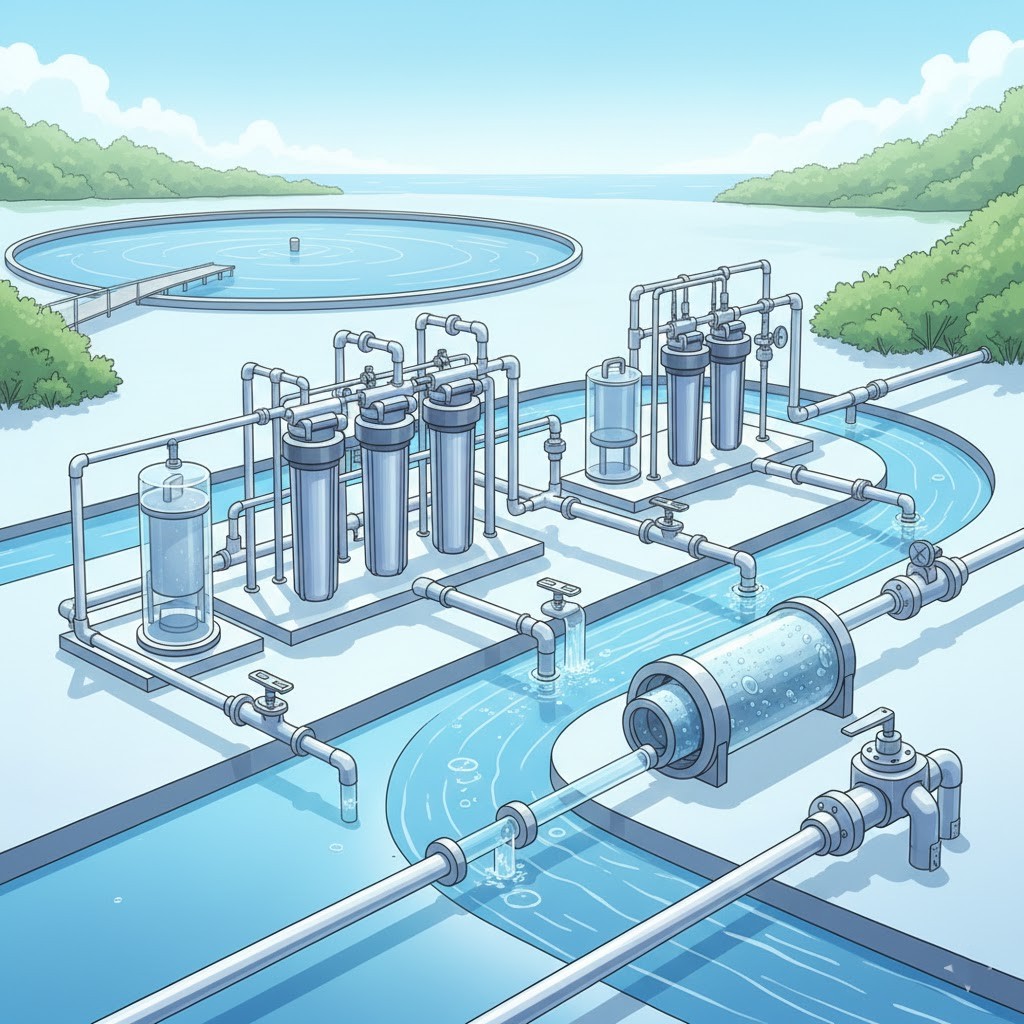
As global demand for shrimp continues to rise, farmers across Asia, South America, and other aquaculture regions are under growing pressure to improve production while protecting the environment. One of the most critical innovations driving this transformation is the aquaculture water treatment system, a technology that focuses on keeping water clean, stable, and biologically balanced. Without proper water treatment, even the most advanced shrimp farming methods will struggle to maintain survival rates, growth performance, and consistent harvest quality.
In this article, we explore how modern water treatment systems support sustainable shrimp farming, improve productivity, and enable farmers to meet international export standards.
- Supporting Sustainable Shrimp Farming Practices
Modern aquaculture is no longer just about producing more shrimp it’s about producing shrimp responsibly. One of the biggest reasons the industry is upgrading water management is the rising demand for sustainability from global buyers.
That’s where the aquaculture water treatment system for sustainable shrimp farming plays a crucial role. These systems ensure that farmed shrimp are raised in a stable, clean environment with minimal environmental impact. Wastewater is filtered, treated, and stabilized before returning to the ecosystem, reducing pollution and helping farms meet international sustainability requirements.
This approach protects coastal habitats, preserves natural biodiversity, and improves the long-term health of farming sites.
- Advanced Technology Improving Water Stability
In the past, water treatment relied heavily on manual monitoring—checking pH, ammonia, and dissolved oxygen using basic test kits. Today, technology has revolutionized everything. Modern farms now use advanced aquaculture water treatment system technology to maintain water quality with precision and consistency.
These systems include:
- automated filtration units
- aeration and oxygenation lines
- mechanical filters
- settling tanks
- water recirculation pumps
- digital sensors connected to mobile dashboards
The real value lies in speed and accuracy. Instead of reacting to water quality issues after they occur, farmers now receive real-time alerts whenever water parameters shift. This prevents stress on shrimp, avoids mortality spikes, and ensures that farms maintain optimal growing conditions 24/7.
- Biofiltration: A Natural and Powerful Treatment Method
One of the most effective ways to maintain water quality is through the aquaculture water treatment system using biofiltration method. This technique uses beneficial bacteria to break down harmful substances like ammonia and nitrite, turning them into less toxic compounds.
Biofilters work by developing dense colonies of nitrifying bacteria on filter media. As water flows through these systems, waste products are converted naturally, keeping the pond environment stable without heavy chemical intervention.
Benefits of biofiltration include:
- low operational cost
- chemical-free water stabilization
- long-term microbial balance
- reduced stress on shrimp
- improved survival rates
Biofiltration is especially valuable in closed-loop and recirculating aquaculture systems (RAS), where maintaining water quality is crucial for high-density production.
- Essential for High-Density Pond Culture
Modern shrimp farming often aims to produce more shrimp per hectare than traditional methods. While this boosts profitability, it also increases waste output from shrimp metabolism and uneaten feed. That’s why farms require an aquaculture water treatment system for high-density pond culture.
With proper treatment systems in place—such as sedimentation tanks, mechanical filters, and aeration lines—high-density ponds remain stable even under heavy biomass loads. This makes it possible for farmers to achieve:
- higher stocking densities
- better growth rates
- more predictable harvest cycles
- lower mortality
- consistent export-quality shrimp
Without effective water treatment, high-density ponds would quickly become toxic, leading to disease outbreaks and production losses.
- Wastewater Management and Environmental Responsibility
Wastewater from shrimp ponds contains organic matter, nitrogen compounds, plankton, and suspended solids. If released untreated, it can harm nearby ecosystems, degrade coastal water quality, and cause regulatory problems.
Modern treatment systems solve this through:
- sedimentation ponds
- multi-stage filtration
- sludge removal
- UV or chemical sterilization (optional)
- controlled discharge channels
International buyers, especially from the EU and US, increasingly expect suppliers to demonstrate environmental responsibility. Farms using structured wastewater treatment systems gain a competitive advantage in the export market.
- Improved Biosecurity Through Clean Water Intake
Water entering a shrimp farm can introduce pathogens, parasites, or harmful plankton. To prevent this, farms treat incoming water using:
- chlorination or ozonation
- mechanical screening
- sedimentation
- biofiltration
- aeration and aging in reservoir tanks
By incorporating these processes into a modern aquaculture water treatment system, farms reduce the risk of infections such as EMS, EHP, and vibrio outbreaks.
Clean water equals higher survival, better growth, and more predictable results.
- Better Harvest Quality for Export Markets
The final benefit—and one of the most important—is product quality. Shrimp raised in clean, stable water develop better appearance, texture, and flavor. With proper water treatment, shrimp maintain:
- bright shells
- consistent coloration
- firm, healthy meat
- reduced off-flavor
- uniform size grading
This makes them highly competitive in international markets and helps farmers build long-term relationships with overseas buyers.
The Future of Shrimp Farming Depends on Water Treatment Innovation
The aquaculture water treatment system is no longer optional—it is the backbone of successful, sustainable, and profitable shrimp farming. As global standards rise, farms that adopt advanced water treatment will remain competitive, efficient, and environmentally responsible.
Indonesia, Vietnam, India, and Ecuador are rapidly upgrading their systems, and companies like YSI Seafood are promoting modern aquaculture practices to ensure consistent export quality.
Clean water isn’t just a requirement—it’s the foundation of the entire industry’s future.